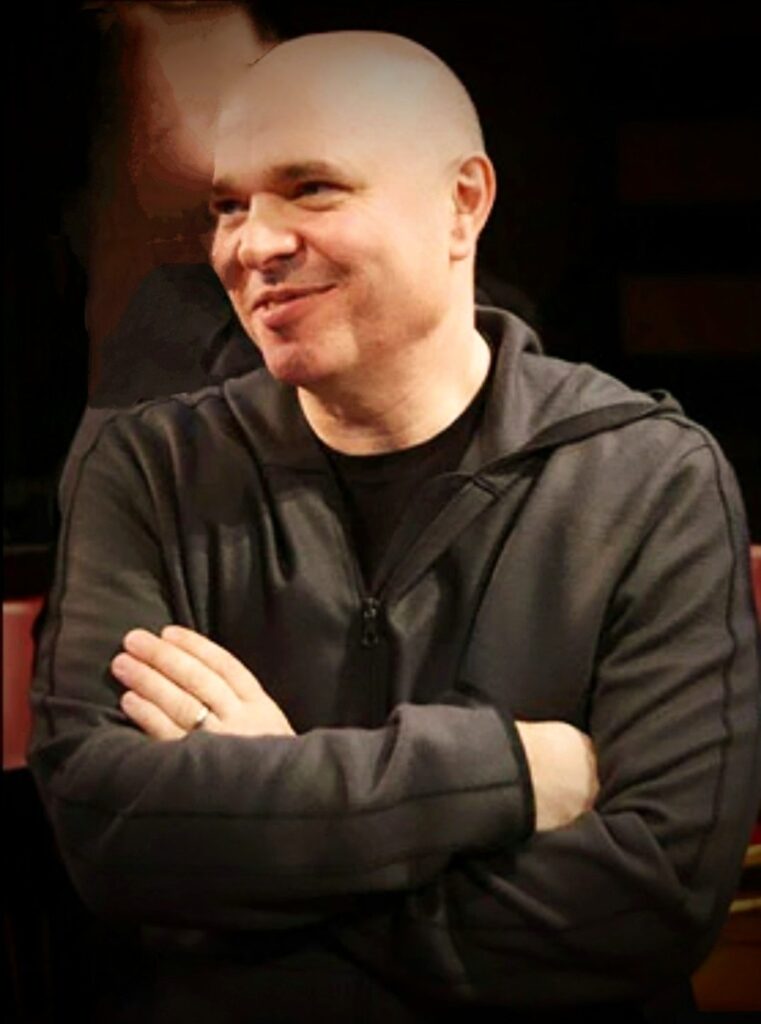
Eighteen years ago today, we lost my amazing brother, Anthony.
Friends will know how much he meant to me, to our sisters, and of course to the whole family.
It was an earthquake, and, much as we try to rebuild, it can never be the same construction.
As my friend Pat put it recently, grief has a half life of forever.
Not least because, as we age, life’s time bombs seem to detonate ever more closely by.
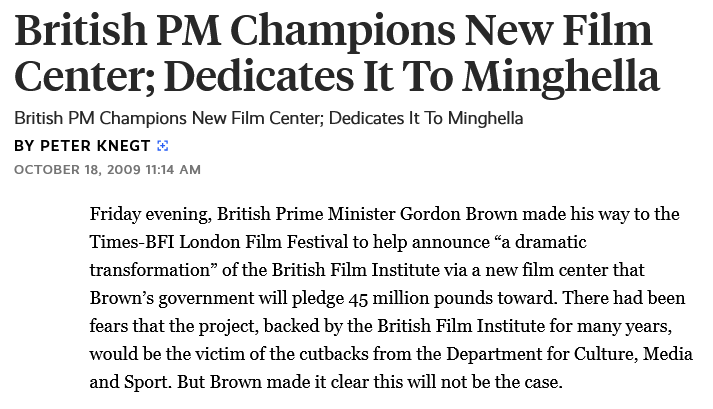
Speaking of constructions, Anthony was the Chair of the British Film Institute (BFI) – championing British film with his characteristic wisdom and irresistible charm.
It was no great surprise that after he died, the government announced a new landmark building for the BFI on London’s South Bank, which was to be dedicated to Anthony.
When David Cameron and George Osborne took power in 2010, they sold ‘austerity’ to the British public (and a surprising number of economists). Cutting into the bone of an already ailing post-crash economy did untold and lasting harm to the UK, and literally took lives, so the withdrawal of funds for new premises for the BFI seems relatively insignificant.
Even so, Anthony’s work arguably represented a high water mark for ‘artistic’ British content; the era of the streamers has masked the reality that small and medium budgeted British stories have all but disappeared.
As the industry continues to contract, we’re no longer seeing headlines like “the British are coming!” in Hollywood’s press.
The opposite, in fact. At the Oscars last weekend, there were no British actors nominated in the top two categories – for the first time since 2012.
That’s not to do with the failure to build a building with my brother’s name on it.
But it is to do with a cultural complacency. British stories, in film and TV and beyond, don’t arrive by magic. They need painstaking, risky development, a real prospect of well-funded production, and effective marketing to compete on the international stage, especially alongside well-funded American content. They need muscular institutional support.
Are good small, very British stories completely dead? No. Think, for example, of the surprise hit I SWEAR by the talented Kirk Jones, doing what our filmmakers do best. John Davidson’s struggle with Tourette syndrome is a great, funny, tragic, important “underdog” story, very well told. But Kirk’s budget was both very small, and to an alarming extent, funded by the sale of his own home.
This is no way for a country with serious cultural cred to carry on.
2010 was a pivotal moment: instead of keeping faith with one of Britain’s major cultural success stories, the government introduced across-the-board cuts to the arts. Attempts to revive the building project, despite considerable private funding, never quite worked without that pledged support from central government.
Anthony is honoured in many ways, with university buildings, theatres, plaques and even a road in his name. Not to mention the legacy of his plays, radio plays, screenplays, opera stagings, and films both directed and produced. His contribution won’t be forgotten.
But that ambitious revival of the BFI, regardless of any dedication, might have been just the act of faith necessary to set British filmed storytelling on the right path.
I can’t help thinking that faith, too, has a half life of forever.