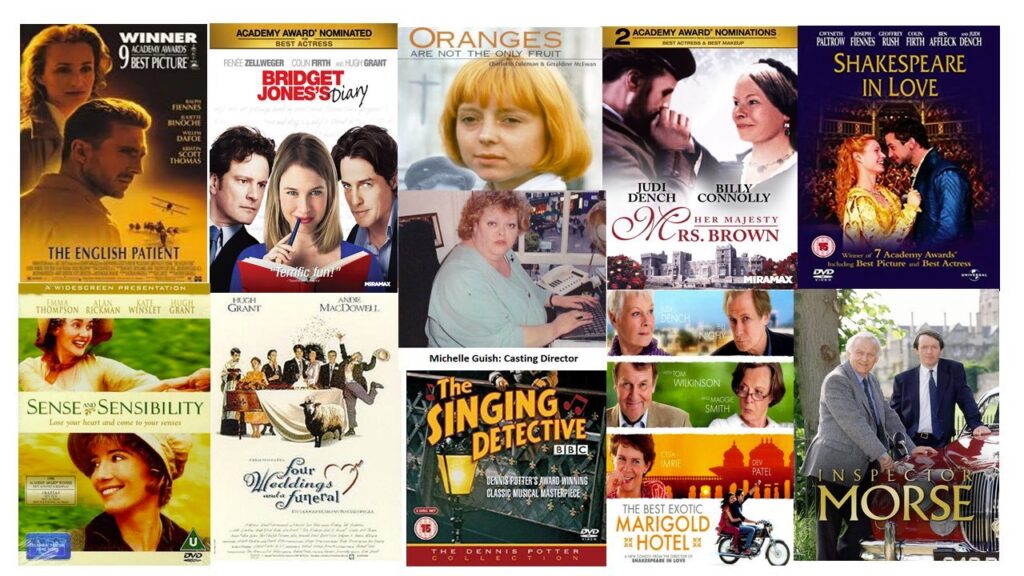
That’s why Michelle Guish was the casting directors’ casting director.
But she was also our “industry Mum”. She hired my partner, Sarah Beardsall, straight out of college, and looked after us both, and taught us the virtues of craft, diligence and integrity in our work.
When I was broke, I’d find a tenner in my jacket pocket, and know it was Mishi quietly looking out for me.
Whenever I fill a dishwasher, still, I remember the machine she bought us for our first kitchen in 1993.
Or how she took our first born, rested him on her shoulder, and didn’t so much pat as whack him into calmness.
A no-nonsense person who could judge – and crush – your terrible ideas with a raised eyebrow or a deft squish of her brightly-lipsticked mouth.
Who loved actors, directors and the business of storytelling.
Who owned every single room she sat in.
Had waiters or shop assistants gladly running to service her every need.
Whose personality was plus, triple plus — and oh, that laugh, piercing and infectious, that went with it.
Who could be the centre of everything and yet, and yet, was so private too. You won’t find much about her online, and even less FROM her.
She had that extraordinary personality, but she valued professionalism too. She would never gossip. She didn’t schmooze. She cared only about getting the work right. She was the real deal. She was kosher.
And the thought that she is gone….?
Just like a Mum, you could call her — Sarah did, and I knew I could — and go straight to the heart of your troubles, and hope for sound advice.
And just like a Mum, the idea that you can’t call her any more… that that laugh has gone, that you’ll never see those censorious eyebrows and that gorgeously expressive face again… it’s too much to bear.
RIP Michelle Guish
9.3.1954 – 24.1.2020
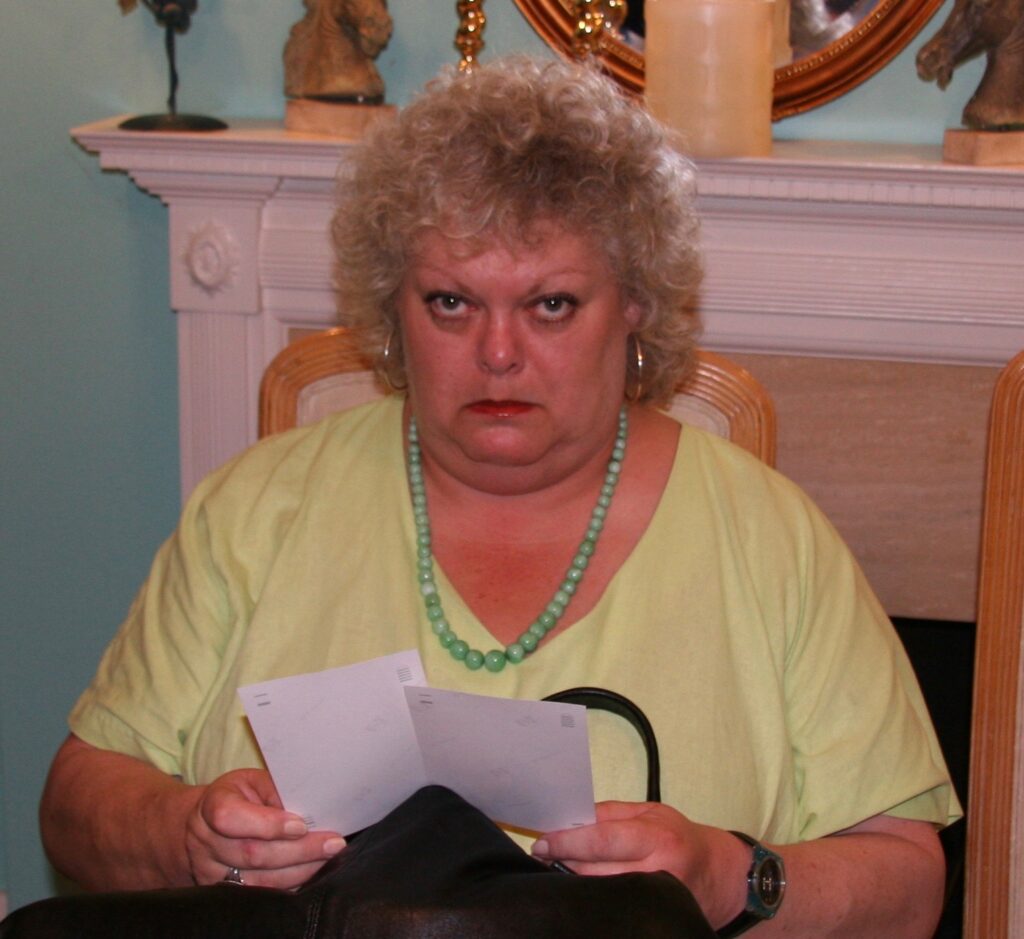
The “Guish look”, from James Francis Trezza.from James Francis Trezza
I was going to write a reflection on this momentous year. Instead, I want to tell you about Muriel. And what’s curious is I don’t know why.
She wasn’t anybody famous, and her life wasn’t particularly notable, and the number of people on the planet who knew and cared about her is probably down to a handful.
But, after this strange and horrible year – including a brush with the Covid brink – I suppose I’ve been counting my blessings and thinking about the good people in my life, and those who have formed me.
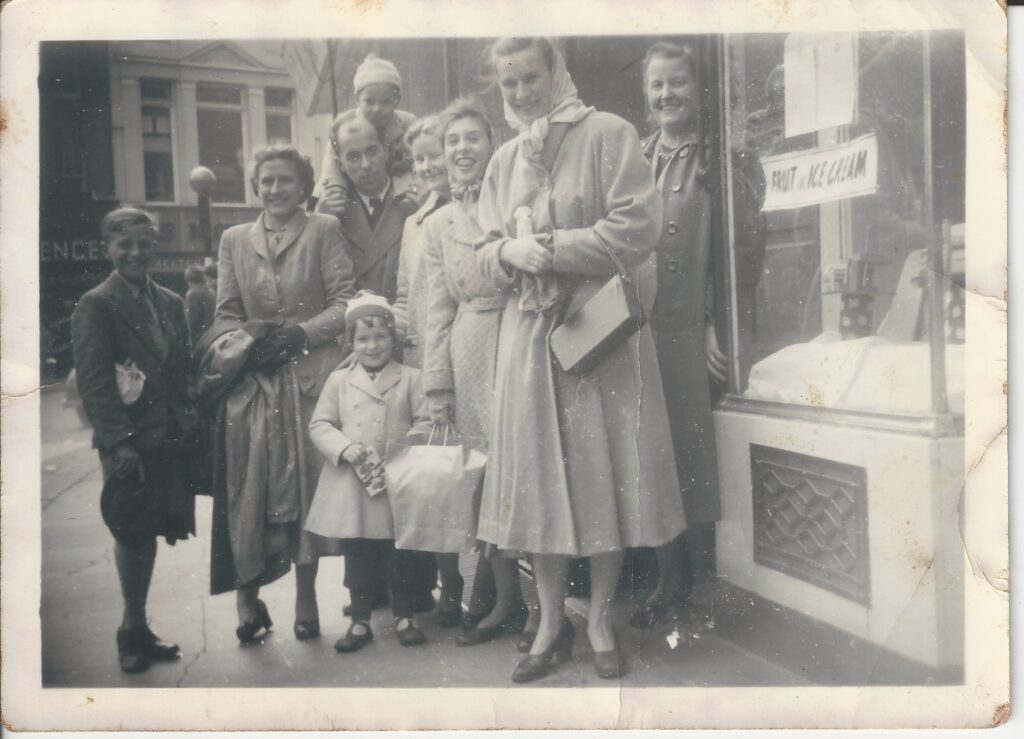
Muriel Winter worked for our parents in our cafe/restaurant/guest house/ice cream factory/ice cream parlour in the High Street in Ryde, Isle of Wight. We called it “the shop”, but it came to comprise quite a large site, both on the High Street and backing onto George Street by the public library. The frontage was bang in the centre of town, opposite Woolworths, and in its heyday it was the place in town. Our family, dominated by the women – our gran (“Mrs A”) and our mum (“Mrs M”) – were larger than life characters in Ryde, and Muriel was their equally-feisty lieutenant. She was de facto in charge when the family weren’t around, strict and forthright and eternally loyal. She saw herself as family, and, by the time I was born in 1966, she already was. When our parents were away, she was a kind of Mum. She would not hesitate to reprimand, and her authority to do so went unquestioned.
Muriel front
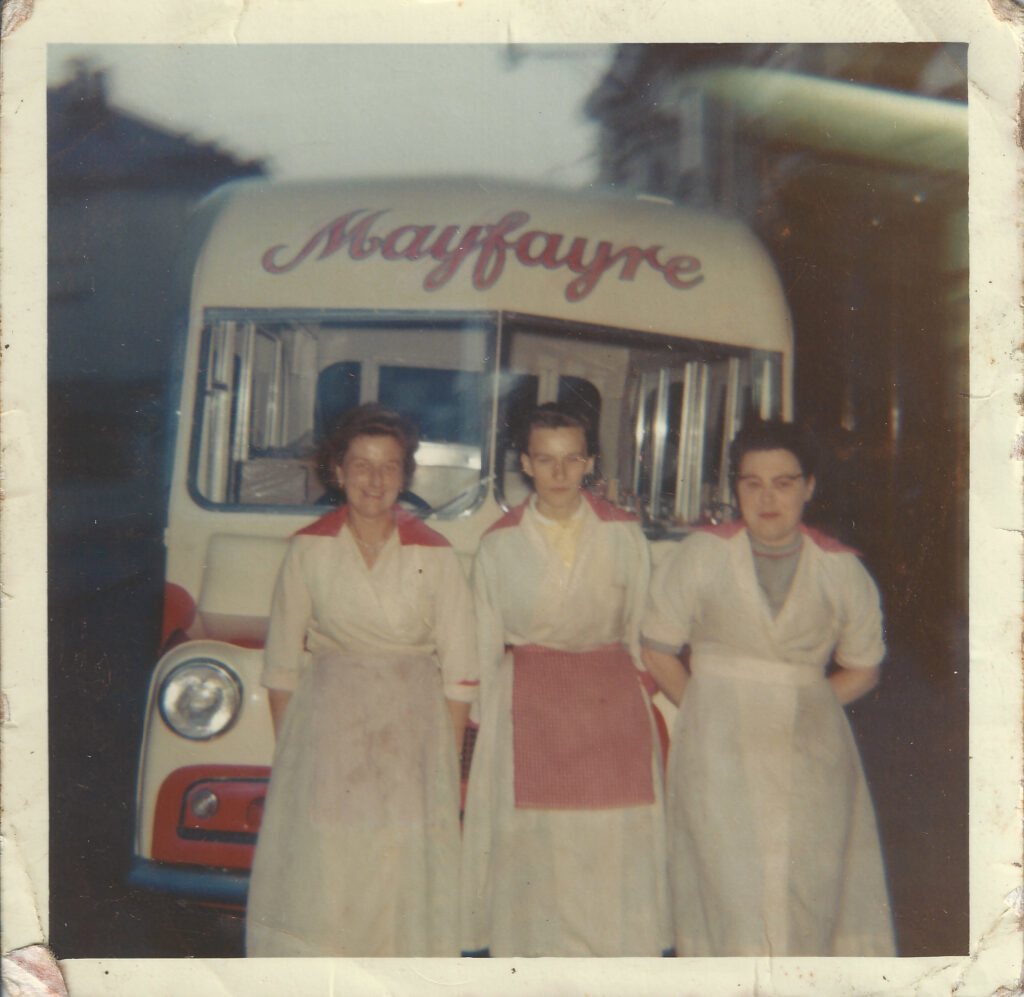
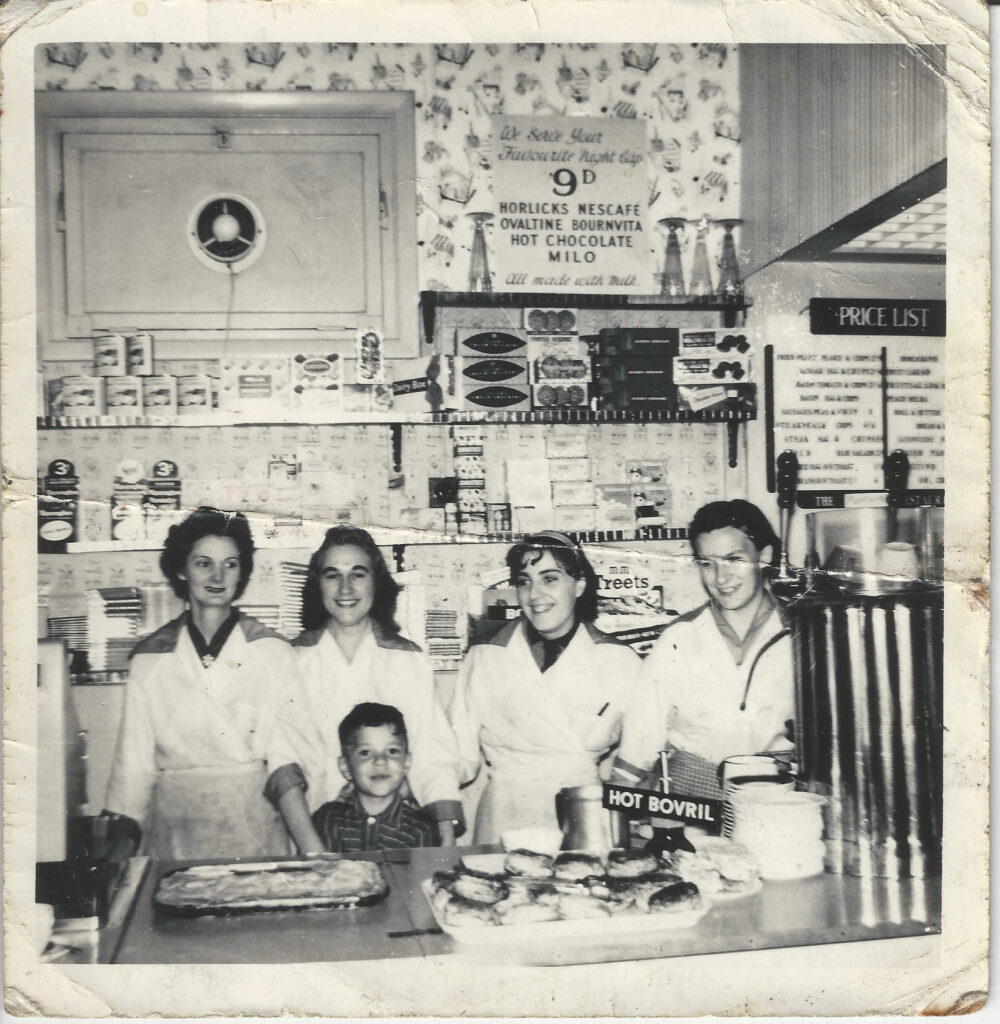
She had started working for us, like many local Ryde girls, at the age of 14, when the business was just a few tables, like something out of Brief Encounter. The business grew rapidly. She was there for its glory days in the 50s and 60s, when it opened for breakfast, lunch and dinner seven days a week, with wedding receptions and events upstairs in the two large function rooms, and a thriving, if somewhat grandly-named, guest house business above that: the Mayfayre Hotel.
Muriel, centre
She lived alone in a faintly depressing council flat on the edge of Ryde, near the High School. She set out large jigsaws on her dining table. She had a black and white telly long after colour came in. She loved Coronation Street. She had no phone (until much later in life, when my sister arranged it, and kindly paid the bills). I remember the flat smelling strange. I remember the hard-edged, rectangular soullessness of it. Tiny plastic dogs on the window sill, which I had once, when I was very little, hoped she would give me. Those dogs remained until her last days.
On my final visit to her flat in 2013, I saw a book open in the kitchen. She was keeping – out of necessity, I’m sure – a note of her milk deliveries, and a running total of how much she owed the milkman. Literally minding the pennies.
In my youth, when we closed the shop for Christmas, she would move to our house, and spend Christmas with us. “Mere” coming was part of Christmas. When we were young, she would bring comic annuals. Remember them? My eldest sister recalls Mere giving her Jack and Jill, and Bunty. My brother, apparently, had Dandy. In my day, it was Whizzer and Chips.
In the 1980s she became less fit and we used to give her a lift home after work. It wasn’t really on our way, and my Dad, whose impatience was aggravated by her slowness, would barely stop the car long enough for her to go through the strangely elaborate rigmarole of undoing the seatbelt and hauling herself out. One evening she was slower than ever, and it became apparent that she had something to say. She took a breath then looked away as she said it: “My little girl would have been 15 today.”
With that, she shuffled towards her flat. I had not known before that day that she had been married, to an Italian guy, whom my Dad characterised as a rogue. She had been pregnant and it was a shotgun wedding. The child was stillborn, and so was the marriage. I never got the sense that Muriel missed the guy, but she was clearly mourning that little girl. I remember her saying the same thing three years later, with the same tight grief in her bearing and in her voice. “My little girl would have been 18 today.”
So we were her family. She spent all her working days, and her Christmases, with us. When the shop finally closed in the late 1980s, she went to register for benefits, and was asked to list her previous employers. She wrote “Minghellas”. The form was returned: “You must list all of your previous employers, with dates”. She said, “I’ve only ever worked for them. And since I was a girl.”
She took her adopted family duties seriously. She followed our news like a blood relation would. She wrote cards to us all, wherever we were in the world, and made sure they were posted in good time. They would typically arrive 5-7 days in advance of a birthday. All our children were remembered too, without fail. My sister even received a birthday card from Muriel after her death; she’d had it ready and left it with her brother to send. Her scratchy scrawl was instantly recognisable in the post, and her reliability was an amusing comfort. On the back she would always write her home address, and leave off the first two letters (“PO”) from the postcode, because she understood those to mean “Post Office” and therefore to be superfluous. (In fact they stood for Portsmouth, which Isle of Wight residents should not, in my view, tolerate! I don’t think we ever disabused her.)
In later Christmases, even when the family had grown great in number, she still had a present for everybody, even in her flat-broke, penny-minding, pension days. Reliable presents: socks, hankies, shower gel, slippers. Clothes for the kids which, if not exactly stylish, were practical and always, somehow, the right size, even if she hadn’t seen the recipient child in ages.
She was meticulous in the receiving, too. At the last Christmas we had together, just before she died, I recall seeing her in an armchair surrounded by discarded wrapping paper and a mountain of gifts and shooting me a stern look: “Dominic, Have I had my present from you?” She had not, and, despite the mountain, there was no danger of her forgetting.
So what? So what about this woman in a lonely flat on the Isle of Wight? The answer is I don’t know. We live in a time when everything, and everyone, has to be remarkable, right? To justify my time writing this, and your time reading it, there has to be something exceptional about her. I’m not sure there is anything remarkable about Muriel. But here I am, and here we are.
After she died in 2014, my siblings and I wrote down memories of her. Her false teeth, and how, when you phoned her, there would be a delay between answering and the start of the conversation, while she put her teeth in. How, if you knocked into her, she would be absolutely affronted, and declare, “I shall have a bruise there later”. (She did bruise easily.) How, if you asked her when the bus went to Newport, she would answer by looking at the clock: “I think there’s one at five- and twenty to.” How we each treasured memories of being taken on trips on her days off – something we never did with our actual parents. She took me on my first trips to Blackgang Chine and Alum Bay. Possibly my only childhood trips to those Island staples.
Our memories were mostly just snapshots, trivial and fond. But I learned another thing I had not previously known: her mother died young and Muriel had to bring up her brother. She may have bruised easily, but she never mentioned her family struggles. Only those anguished anniversaries leaked out.
That last Christmas, it fell to me to drop her home to her miserable flat. She did that thing of delaying her exit from the car. She said, “You’re the family I never had.” I don’t know what I said. I had preoccupations of my own. I’m sure I said something perfectly nice. But I don’t think I said what I should have said: “We’re the family you did have, Mere. And you are our family, and we love you.”
Oh. I see. That’s why I’m writing this. If 2020’s rumbling, any-moment possibility of demise teaches us anything, it must be to take those moments; to embrace those opportunities; to say the right thing; to express the gratitude and the love. For our families, our adopted families, and our friends. They are remarkable, because they form and define us, and that is enough. Not just enough. It’s everything, actually. And there is no time like now, while there’s oxygen in the lungs, to say it.
Come March, our Muriel, our Mere, would have been 84.
RIP Muriel Winter 4.4.1937 – 12.3.2014
Muriel, far right. Spot the young Anthony Minghella reporting for duty!
Johnson and co want us to celebrate the trade deal and move on. But for the supporters of both Remain and Leave, it isn’t that simple, and the architects of Vote Leave have only themselves to blame.
Glad tidings! Boris Johnson has a present for the country. His draft EU/UK trade deal is a “feast” to follow the “starter” that was the oven-ready meal of the Withdrawal Agreement. Not just that. More than a mere gift, the deal finally resolves “a question that has bedevilled our politics for decades”. Like its illustrious architect, this deal deserves a place in history.
Set aside the astonishing denial of facts. Hard Brexit is far worse than the arrangement we had before, and far worse than anything suggested during the referendum campaign. It is “project fear” writ large and long. It entails an amount of red tape more suited to a bygone age, and a very significant, permanent diminution in the size of our economy. It is, as a matter of economic fact, anything but a gift. It takes rather than gives. It is the very opposite of Christmas.
Johnson once joked that voting Conservative would “cause your wife to grow larger breasts”. But we now know that, unless you’re one of their cronies, voting Tory has caused your wallet to shrink while everything else has, sadly, sagged.
Set aside, too, the astonishing hubris. The “World King” now adding “Glorious Solver of Political Schisms” to his self-styled grandiosity. Not to mention “Father Christmas”.
All that trolling and narcissism aside, what Johnson and co now appear to want is a pass to avoid scrutiny. To move on from what has, on anybody’s measure, been a disaster for our politics, our economy, and our society. Michael Gove, writing in today’s The Times, hopes the Brexit deal will end the “ugly politics”:
“Friendships have been strained, families were divided and our politics has been rancorous and, at times, ugly. Through the past four years, as a politician at the centre of this debate, I’ve made more than my share of mistakes or misjudgements, seen old friendships crumble and those closest to me have to endure pressures they never anticipated.”
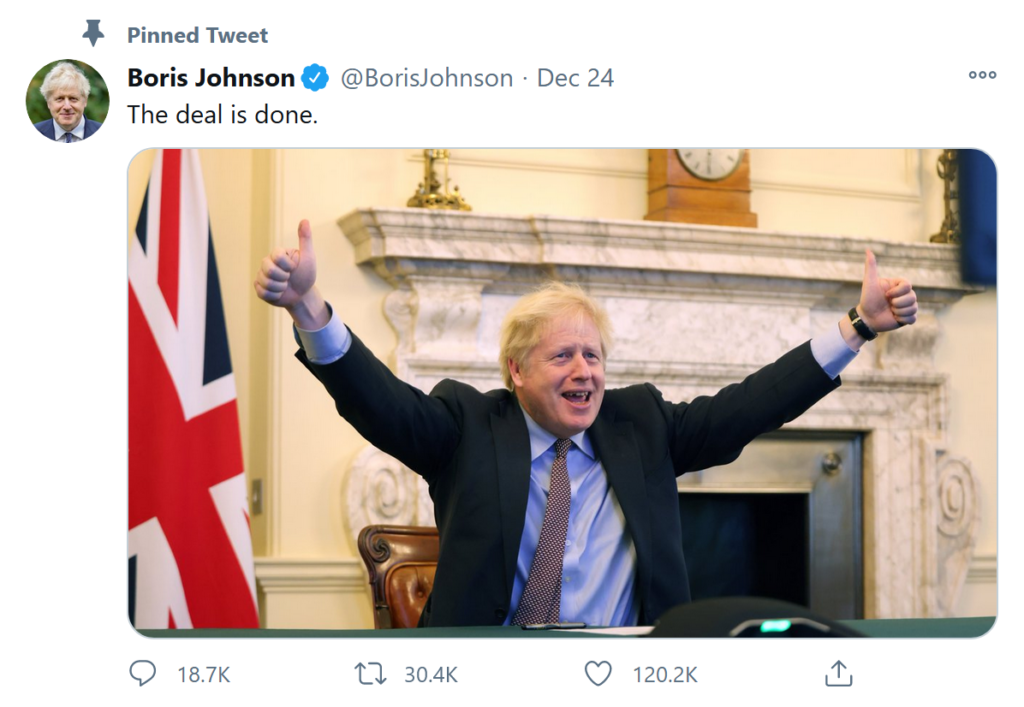
Note the modest mea culpa in there too. The Brexiter politicians have got what they wanted. Now they want, with much fanfare and some token apology, to wipe away the damage, sidestep the scrutiny, and invite us, in the spirit of Christmas, to unite behind them. They want Brexit to be bookended, as if it began with Dimbleby’s referendum night “We’re out!”, and ended this week with Johnson’s triumphant, arms-outstretched “The deal is done”.
The weight of the evident desire to close a chapter is revealing. It suggests – doesn’t it? – that, for the Vote Leave politicians and their shady backers, the job is done. It suggests that getting here, in and of itself (and separately from any economic or social consequences for the country) has a payoff for them. It is the result. Now and not next year. You can speculate as to what that precise payoff is for them, but remember that Johnson’s own sister wondered if it was to do with protecting the UK’s network of tax havens from EU regulation. That job is surely done.
Whatever the true motive for such a dogged and harmful pursuit of Hard Brexit, it is clear that the Vote Leave politicians wish to bank this achievement, close the book on it, and roll on to the next item on their agenda for our unsuspecting country. History warns us that disrupters with this amount of power and this lack of regard for institutions, protocols and democracy, will have some nasty surprises up their sleeves. It also tells us they will only be stopped by force. It doesn’t bear thinking about.
But for voters it won’t be so easy. Because there is a fundamental tension between the politicians’ evident desire for Brexit to be over, and the way Vote Leave (the very same politicians) burmed Brexit into its supporters’ psyches. It did so, very substantially, by selling it as a working class fight with the middle class, whom it skilfully misidentified and branded as “the elite”. A section of society, typically without higher education, enjoyed a new-found power, through the leveller of the ballot box, to stick it to the comfortable, typically university-educated, middle classes. These Brexit supporters, it was at least plausibly argued, were Britain’s Left Behind, and felt it. They were, undoubtedly, harder hit by Tory austerity. They were inclined to believe suggestions that life, for them, would be better outside of the EU. And even if it weren’t, it was still likely that the middle classes would get a taste of suffering. It was the ugly inverse of “levelling up”. Nothing made them happier than mocking Waitrose shoppers fretting about the risk of losing their epoisses cheese post-Brexit, or People’s Vote marchers breaking away from genteel protesting to grab a prawn sandwich from Pret.
This class warfare, or higher- versus school-educated warfare, or culture war as it is variously described, has become entrenched. As many Remainers have noted, 2016’s winners were not suddenly happy. They had won, but they still wanted to fight. They wanted to rub Remainers’ noses in their victory. They may have said, repeatedly, “You lost, get over it,” but it appeared that the very last thing they wanted was for anybody to get over it. They wanted it to hurt. They wanted Remainer tears. They pushed and prodded until they got them. Then they started all over again. Much of this was, and still is, sustained by a number of high-profile provocateurs, with links to Vote Leave, whose social media accounts thrive on a shock-and-awe, professional nastiness which has come to define the tone of political discourse in our times.
The referendum victory did not deliver for the people who voted for it. It did not resolve any issues that had “bedevilled” them for decades, not least because many of them had little idea of, or care for, the EU’s role until they were whipped into a Cambridge Analytica-induced frenzy in 2016. The win changed nothing, except to embolden their baiting, at least in their eyes giving an intellectual endorsement to the Brexit position: it must have been right, because it received more votes. It must have been right, because the Government was now enacting it. And yet there was no pleasure in the content of the win. No pleasure in the consequences of Brexit. No identification of benefits for the country beyond a nebulous notion of “sovereignty” – sovereignty which, on any proper analysis, has been not so much restored as sacrificed.
The pleasure in Brexit for so many of its supporters on the ground was not, and is not, answered by the reality of Brexit. It is answered in seeing the pain of those who feel its consequences most acutely. It is answered in the ongoing stimulation of that pain. If the Brexit story were ever to be closed, that ongoing pleasure would be taken away. If the Remainers ever really accepted loss and “got over it” – if they ever truly “moved on” – the Brexiter public, as distinct from its instigators, would lose their sensation of power. They can no more accept Brexit for what it is and move on than the Remainers can.
For the Remainers, moving on from a Hard Brexit – mocked as absurd alarmism in the early days, but now wrapped in a Christmas bow – is not going to happen any time soon. Even if this had been a soft Brexit, retaining full membership of the Single Market and Customs Union, a trade deal is only a trade deal. Just as the Brexit-voting public don’t appear to be as bothered by commercial harm as symbolic freedom – the much-vaunted emotion of Brexit – so it is with Remainers. The trade deal could be fantastic, but the emotion of membership would always be missing. Remainers and Leavers alike have associated freedom with their cause. And belonging. Identity. You don’t “move on” from that kind of stuff in a hurry, and certainly not just on the basis of a trading arrangement. The key drivers of the Brexit debate – emotion and identity – are wholly untouched by a trade deal.
Perhaps the Vote Leave cabal realises this. Perhaps a mighty dread has seized their troubled minds. If not, and they really think they can gaily and without consequence skip to the next chapter, it would only go to show how little they understood the division they’ve been stoking these last few years, and the reckless cynicism with which they have stoked it. Either way, God rest ye merry, gentlemen. God rest ye.
Thanks for reading. Please help me reach more like-minded readers by using the sharing buttons below. Thank you!
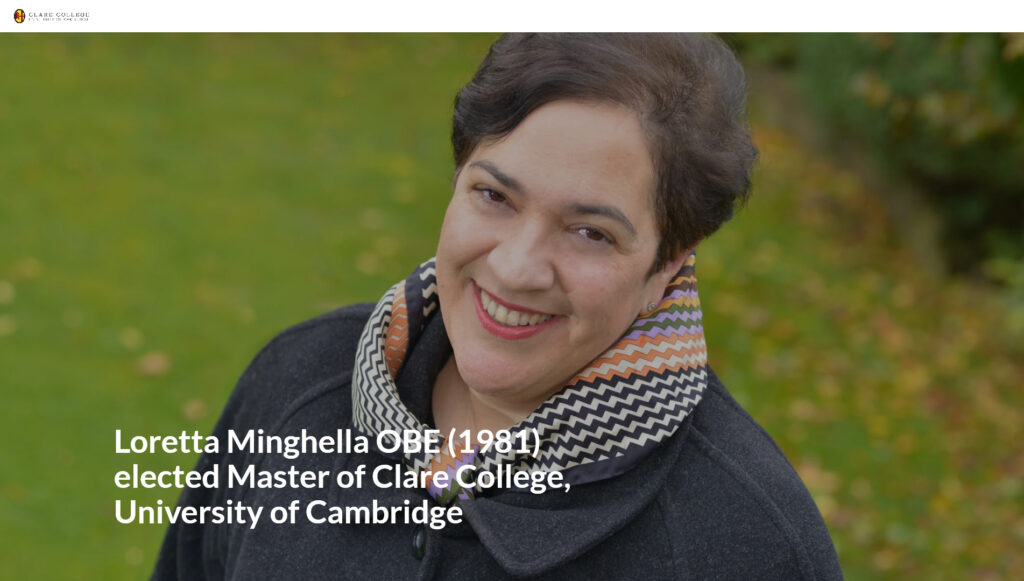
Congratulations to my brilliant sister, Loretta, who has been elected first woman Master of Clare College, Cambridge.
Clare is a big part of our lives. My partner, the equally brilliant Sarah Beardsall, also went to Clare. (No doubt inspired, as we all were, by the path Loretta had beaten from Medina High to the hallowed halls.) Which in turn means I spent a lot of my own university days as a stowaway in CB2.
Here’s hoping that the new Master will allow me in through the front door!