Reality Bites

7th January, 2013

Reality bites…

… but if Labour is hoping that the cuts kicking in will change the game, it is mistaken.

Writing in this week’s Observer, Andrew Rawnsley argues that the Tories’ overtly political attempt to put Labour on the spot over the proposed welfare caps could backfire badly.

http://www.guardian.co.uk/commentisfree/2013/jan/05/labour-party-bill

The Tories are proposing a 1% cap on increases in most state benefits for three years. They are bringing their plan to the Commons for a vote – even though a vote is probably unnecessary – so that they can put Labour in the position of having either to support it (contrary to its core values) or reject it (and risk looking like the party of “unlimited welfare”).

Andrew Rawnsley’s analysis of this cynical strategic motivation is widely accepted.
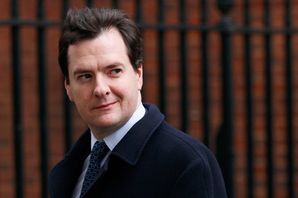
George Osborne

But Rawnsley thinks it won’t work out the way Chancellor Osborne expects.

Rawnsley argues that once the “strivers” – those in work but also to some degree dependent on state benefits – realise that they too are going to be adversely affected by the squeeze (and by a raft of other measures which will kick in this year) then they will turn against the Tories.

It’s an argument I would like to be true.

It is a version of the argument going round Labour circles in the spring of 2010. The idea was that, since nasty cuts were inevitable after the election, it would be no bad thing for Labour to accept defeat, let the Tories take the helm for the bumpy ride, and regroup in time for the next election, when surely people would have had enough of austerity.

Again, I hope this line of thought will turn out to be true.

But I fear that it lacks psychological insight.

Rawnsley suggests that when blue-collar voters realise that the cuts are hurting them just as much as they are hurting the scroungers, then, far from punishing Labour for opposing the cuts, they will turn back to them. Biting reality will reverse the “C2 meltdown” of 2010.

I can’t see it.

Because, as Rawnsley himself points out, the Tory spin doctors have done such a wonderful job of dividing the nation, and painting the picture of the closed-curtain layabout getting fat on his couch while the rest of us struggle into work. (In reality, only 3% of the welfare budget goes to unemployed people, and fraud accounts for less than 1% of that 3%. Yet 47% of us think the government is “not tough enough on benefit” and should do more to force people into work. – YouGov)

Because the Tory spin doctors have done such an overwhelming job of pinning the blame for their cuts on Labour.

Because – although Labour (and indeed many right-wing) politicos are at pains to point out that the cuts have yet properly to kick in – the perception of austerity has been with us for two and a half years. We already think we are suffering. We’re already tightening our belts. We feel the pain already. And yet there are no signs of a dramatic shift in mood. The C2s are not flocking to Labour.

Will it be different when the perception of pain is matched in reality? I don’t think so. If I think there’s only £20 in my wallet, and it then turns out there is indeed only £20 in my wallet, I am in no worse a mood.

Even if I did feel worse off when the cuts actually bite, would I need a new scapegoat? If I already thought that scroungers or foreigners or bankers or Labour were the cause of my paltry purse, why would I suddenly change my mind and blame the Tories?

So if Labour is hoping that the imminent reality of austerity will, on its own, clear the path for a return to power in 2015, it is mistaken.

Labour can’t wait for the Tories’ economic strategy to be deemed wrong by dint of time or pain or miraculously changed perception. It must make the argument that the strategy is wrong.

Further, Labour must ensure that the blame for the attack on the state is correctly apportioned.

And above all, Labour needs to understand what the Tories so effortlessly tap into: the psychology of mean-spiritedness. People who are scared, who are feeling the pinch, and who, because of those anxieties, are inclined to believe daft, demonising stories about benefits millionaires need an alternative narrative. A narrative which enables them to feel better about compassion than about righteousness.

That narrative needs crafting, and selling, by Labour. The reality of austerity, on its own, will not do the job for them.

For now, George Osborne has nothing to worry about.

Tutu, Blair, and the sexing up of guilt

2 Sept 2012

I’m disappointed in Desmond. The man we were all so fond of that his very name made academic mediocrity (a 2:2 degree) almost cool.

Why?

Because Bishop Tutu has joined the Blair-bashing bandwagon and called him a liar.

http://www.guardian.co.uk/commentisfree/2012/sep/02/desmond-tutu-tony-blair-iraq

In an article extolling the virtues of moral leadership, the good Bishop presumably means to set an example by suggesting that Blair be “made to answer” for his actions “in the Hague.”

He predicates his attack on Blair on an unsupported supposition: that the suspected presence of WMD was an outright lie. It is as if the notion of this “lie” were a given, and needed no supporting evidence.

You might think that the war was horrible. I do.
You might wish that we had never gone there. I do.
You might feel sickened by every fruitless injury or death or displacement. I do.
You might feel that the 45-minute “sexing up” of the WMD threat was regrettable. I do.
You might wish that Tony Blair had been more of his own man vis-a-vis Bush. I do.
You might wish that Tony Blair had insisted on buying the weapons inspectors more time.
You might wish that Tony Blair had been more open about his desire for regime change.
You might feel angry about, and ashamed of, the whole thing.

But there is no evidence that Tony Blair lied about the suspected presence of WMD. Is there?

I have looked. Have you?

And unless you have evidence that he was lying, it’s an extraordinary – and vile – claim to suggest that he was.

If you are a good, moral, virtuous leader, and you want to demonstrate that by calling for someone to be sent to the Hague and tried for war crimes, you’d better be very sure of your ground.

For my part, I haven’t seen any evidence to suggest Blair didn’t think Saddam had WMD. Shoot me down. Send me the links. I don’t mind being wrong. But I want to be wrong based on evidence, please.

A word of warning: if you’re going to go to sources, please go as directly to the source as you can.

For instance, I’ve seen the Butler report quoted like this:

Intelligence on Iraq’s weapons of mass destruction (WMD) and ballistic missile programmes is sporadic and patchy… From the evidence available to us, we believe Iraq retains some production equipment, and some small stocks of CW agent precursors, and may have hidden small quantities of agents and weapons.

– Joint Intelligence Committee (JIC) assessment on 15 March 2002

This excerpt has been set against an interview in which Tony Blair suggested that Saddam had “stockpiles” of weapons, when the intelligence was clearly talking in terms of “small quantities.” “See?” runs the argument: “He was lying.”

But the source contains an extra sentence:

Intelligence on Iraq’s weapons of mass destruction (WMD) and ballistic missile programmes is sporadic and patchy… From the evidence available to us, we believe Iraq retains some production equipment, and some small stocks of CW agent precursors, and may have hidden small quantities of agents and weapons. Anomalies in Iraqi declarations to UNSCOM suggest stocks could be much larger.

– Joint Intelligence Committee (JIC) assessment on 15 March 2002

Furthermore, the context of the excerpt is:

274. On Iraq’s chemical weapons programme, the JIC reported in Key Judgements to its assessment that:

Iraq may retain some stocks of chemical agents.

and that:

Following a decision to do so, Iraq could produce:
– significant quantities of mustard within weeks;
– significant quantities of sarin and VX within months, and in the case of VX may have already done so.

[JIC, 15 March 2002]

This is hardly the source-based evidence that Blair-bashers need when they say he was lying.

When politicians do things in our name with which we violently disagree; when they do it despite clear and overwhelming lack of popular support; when they do it anyway and it all goes wrong in the most horrific way, we want to express our shame, frustration and anger.

We want to show that we are good, loving members of Tutu’s human brotherhood. Built, as he says, for goodness. We want to put a distance between ourselves and what went wrong. We want to show our credentials as well-meaning pacifists. We want to show, especially if we are on the left, that we don’t automatically and naively accept everything that was done by a left-wing party. We’re better, cleverer, and, above all, sorrier than that.

So fierce is the shame, so repellent is the human cost, that it feels easy and uncontroversial to go the next step and call the man in the middle of the mess a liar.

To scream for vengeance, court and criminality.

It’s certainly therapeutic.

But to go down this path without solid evidence – the sexing up of guilt – is not the action of caring, thoughtful, built-for-goodness folk.

For my money, Blair did not lie about the suspected presence of WMD.

And when good people use their currency – Nobel Peace Prize-winning currency, no less – to go along with unfounded supposition, I feel compelled to pipe up.

Desmond: for showing that leadership; for demonstrating that “honesty, morality and love,” it’s a 2:2 I’m afraid.

Made In Downing Street’s Rhetoric

Today, David Cameron is going to make the argument that austerity (or cuts or, as he recently tried to call it, “efficiency”) is an essential prerequisite to growth. This is because the Coalition thinks it is “winning the argument on deficit reduction, but losing the argument on growth”. (These are Nick Robinson’s words, but they sound to me like they’ve come straight out of Downing Street.) The phrasing is of course disingenuous, because it seeks to separate the responsibility for the flatlining economy from the policy – and rhetoric – on the deficit. They are bound up. They cannot be separated.

Labour will argue that no matter how hard the Coalition seeks to shirk responsibility, this recession has been Made In Downing Street, and the public knows it is true.

But is it also true that you can reduce the deficit at the same time as enjoying growth? Of course it is. They must go hand in hand. But here’s what cannot happen: you can’t expect cuts or austerity or efficiency to PRODUCE growth. You must have a strategy for growth which goes beyond “straining every sinew.” (There are debates to be had about shrinking the state in order to “allow” the private sector to flourish. They’re rubbish arguments at the best of times, and in times of recession they are positively dangerous. The results of austerity at home and in Europe are there for all to see.)

And you can’t bang on, as the Coalition has done for reasons of political expediency about the “mess” left by the last government, about how it’s the worst it’s ever been, about the need for drastic cuts across the board, without people eventually hearing you. They will hear you and they will be expecting redundancies and they will be expecting their benefits to be cut and they will be expecting their wages to fall back and they will be expecting their savings to shrink and they will be bracing themselves against the dire storm ahead. It will be a wet winter, a snowy Christmas, the wrong leaves on the line… messing up not just this quarter or that, but messing up the picture for years. Nobody in their right mind will spend, and no business in its right mind will invest. You do not need to be an economist to understand this story. In fact I sometimes wonder if it helps not to be an economist.

But the politics, if not the economics, are easy to see. The Coalition’s very existence depends on its self-proclaimed formation “in the national interest”, in a time of crisis, to fix the economic mess. It simply has to talk about how dirty our house is, in case we start to wonder how much we need the cleaner. Whereas, in the past, chancellors and prime ministers have benefitted from talking the economy up, this government has wrapped its identity around economic despair. It has committed itself to talking the economy down. That’s why it is “losing the argument on growth”. It cannot make an argument for growth at all. It is a problem entirely of its own, cynical making.

There’s a strange idea going round at the moment – eg on Newsnight last night – to the effect that there has been no austerity yet (and, by implication, the Coalition needs to be more brutal). It’s true that the planned cuts have only kicked in by, perhaps, 10%. But that misses the point. Everybody knows deep cuts are in the system, and it is that knowledge, that expectation – constantly justified and reinforced by rhetoric of dire portent – which has already generated the reaction to austerity. That reaction is stagnation and fear, and it has been entirely produced by the merchants of doom in Downing Street.

The Moody’s Blues

14th February, 2012

The credit ratings agency, Moody’s, has given the UK a negative school report.  I try to quote from the source, so here’s what they say:

Moody’s changes the outlook on the United Kingdom’s Aaa rating to negative

Moody’s Investors Service has today changed the outlook on the United Kingdom’s Aaa government bond rating to negative from stable.

The key drivers of today’s action on the United Kingdom are:

1.) The increased uncertainty regarding the pace of fiscal consolidation in the UK due to materially weaker growth prospects over the next few years, with risks skewed to the downside. Any further abrupt economic or fiscal deterioration would put into question the government’s ability to place the debt burden on a downward trajectory by fiscal year 2015-16.

2.) Although the UK is outside the euro area, the high risk of further shocks (economic, financial, or political) within the currency union are exerting negative pressure on the UK’s Aaa rating given the country’s trade and financial links with the euro area. Overall, Moody’s believes that the considerable uncertainty over the prospects for institutional reform in the euro area and the region’s weak macroeconomic outlook will continue to weigh on already fragile market confidence across Europe.

How do we respond to this?

You can ask who the hell are these credit-rating agencies anyway?   That’s Alastair Campbell’s question (here).  And it’s worth asking.

You can claim that it supports your argument on austerity.  It doesn’t matter which side you’re on.  Labour claim it shows the plan’s not working.  Ed Balls says the brave thing now would be to admit that a change of course is necessary.

And arguing for a change of course is no more than the Tories did the last time this happened, in 2009, when Standard and Poor’s issued a similar warning. “It’s now clear that Britain’s economic reputation is on the line at the next general election, another reason for bringing the date forward and having that election now,” said the then Shadow Chancellor, George Osborne (21 May, 2009).

But George Osborne now argues the contrary – that the Moody’s news is an argument not to change course.  It is a “reality-check” that Britain “must not waver” in dealing with its debts.

To which the question must be asked: what would count as sufficient reason for a change of course?  If the austerity measures bite hard, they will reduce spending power, lower employment, reduce tax take and (no matter how hard we try) increase welfare spend.  Borrowing will therefore get worse.

If the response is then to tighten further, when will it ever stop?  It is a genuine question.

To put it another way: how bad would an economic spiral have to be before a change of course were justified?  As bad as Greece’s?  The answer to their nose dive seems to be: more of the same.  Ouch.

To put it another way: is there ever an economic question to which fiscal tightening is not the answer?  If the answer is no, then let’s not waste time with questions or economic metrics.  Who cares about evidence?

“Did you send me that Valentine’s card?” “Maybe, maybe not.”

To be fair to the Chancellor, Moody’s are keen on fiscal tightening too.  But here is what they say:

WHAT COULD MOVE THE RATING DOWN

The UK’s Aaa rating could potentially be downgraded if Moody’s were to conclude that debt metrics are unlikely to stabilise within the next 3-4 years, with the deficit, the overall debt burden and/or debt-financing costs continuing on a rising trend. This could happen in one of three scenarios, all of which would imply lower economic and/or government financial strength:
(1) a combination of significantly slower economic growth over a multi-year time horizon — perhaps due to persistent private-sector deleveraging and very weak growth in Europe — and reduced political commitment to fiscal consolidation, including discretionary fiscal loosening or a failure to respond to a deteriorating fiscal outlook;
(2) a sharp rise in debt-refinancing costs, possibly associated with an inflation shock or a deterioration in market confidence over a sustained period; or
(3) renewed problems in the banking sector that force a resumption of official support programmes and spill over into the real economy, indirectly causing lower growth and larger budget deficits.

Look at point 1.  Yes, Moody’s doesn’t like the idea of ‘discretionary’ fiscal loosening – for which read, ‘government losing its nerve’.  But before that, they fear ‘significantly slower economic growth… due to persistent private-sector deleveraging”.  For which read, ‘the private sector cutting and running.’

If you’ve ever read my blog, you’ll know which alarm bell bothers me most.  It’s the private sector running, in response to fiscal tightenings achieved and promised, and to the talking-down of expectations.  Who would invest in this climate?

But that is not my point today.  My point is this. On their own, the Moody’s Blues tell us nothing at all.

You can ask who the ratings agencies are to go around putting the wind up markets and governments, lecturing us in a brand of English that resorts to phrases like ‘multi-year time horizons’.

You can debate whether bad reports justify holding the course, or switching it.

But you still have to decide how to get out of the doldrums.  You have to decide whether fiscal tightening in the short run can work, or whether it is just so much dangerous leeching.

You still have to decide whether government gets out of the way, or whether government leads the way.