I’ll Always Go Back To That Church

6th January, 2013

Today is the birthday of my brother, Anthony Minghella. He would have been 59.

Last year someone sent me a link to a wonderful photograph of him on location, which I hadn’t seen before. I wanted to share it today, but alas I can’t find it. There are so many photos on the net, I’m just trawling through a million Ants, and after a full hour, I’ve given up.

Maybe it’s a lesson. Not to dwell in the past. Not to wallow in a patchwork of Google thumbnails.

He used to say that you should never let a day go by without creating something. That means something new. That means living, not dwelling.

Still, I confess, I do dwell, and please allow me to do so each year on 6th January.

Perhaps my failure to find the “right” photo of Anthony is indicative of a certain elusive quality. He was famously adaptable. He seemed to be able to turn his hand to anything: theatre, radio, TV, film, opera.

He hated, as all artists do, to be pinned down. Maybe that’s why I can’t find the photo. Maybe there isn’t just one.

Just as there isn’t ONE photo of him, there isn’t ONE photo that captures his work.

But there is a “movie moment” I find myself returning to. It captures his ambition, his originality, his soaring big-heartedness. On a day like today, this seems a good enough place to go.

I’ll always go back to that church.
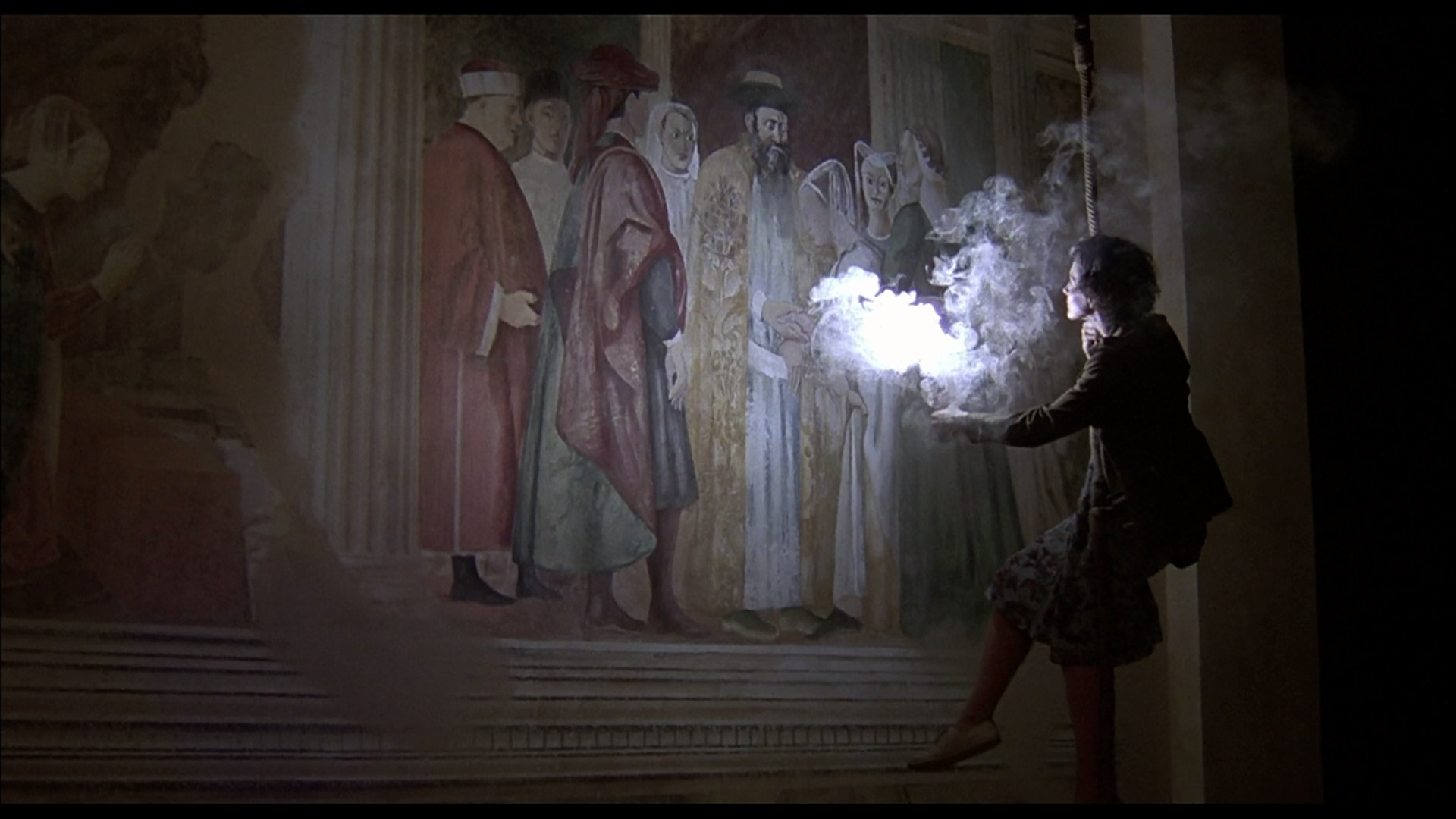
English Patient

Just Because

18 June 2012

There’s a thing we say in our family: Just because….

It’s a something my brother Anthony used to say, when he was a boy. When in trouble, he would start to explain himself, “Just because I forgot my boots…” and burst, before he could say more, into tears of despair.

Our Dad thought it was hilarious, and it has since been adopted family-wide as shorthand for ‘sorry’. I forgot your birthday? Just because. Your present is late? Just because. It is, inevitably, a much deployed expression.

And today I deploy it myself, for having neglected to send my fabulous Dad anything for yesterday’s Father’s Day. Again.

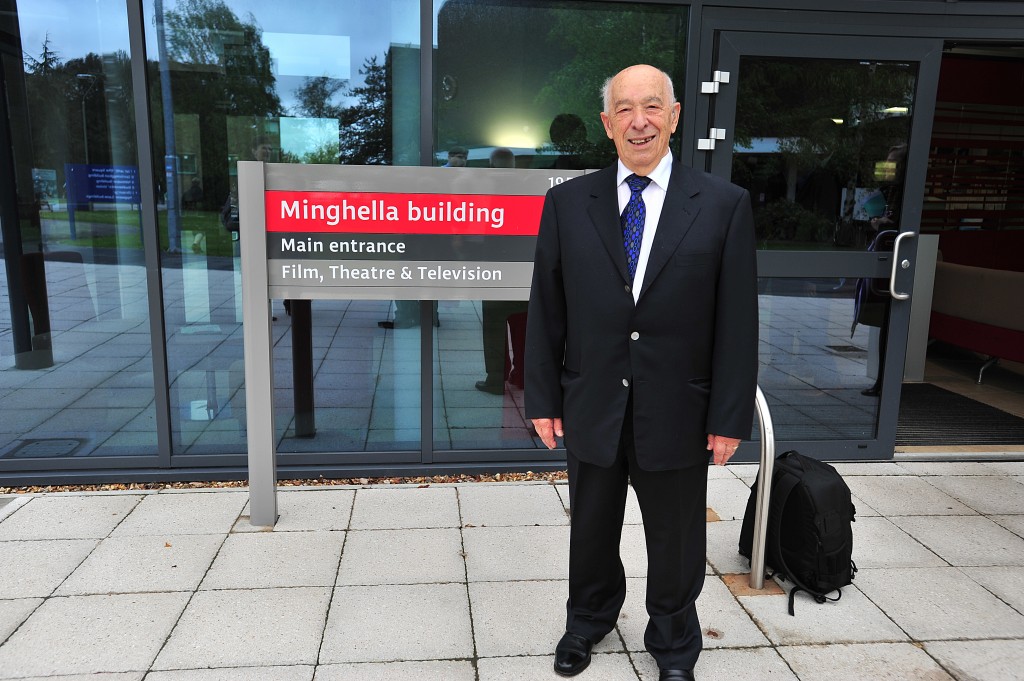
Here he is (below) at the recent opening of Reading University’s Film TV and Theatre Building, named after Anthony. One can only imagine the pride and the pain of attending such an event; celebrating a son prematurely taken. Our Dad handles these things with dignity and, always, a joke.

He is responsible for many aspects of our family’s collective personality. We have inherited, extended, developed and downright copyrighted so many of his attributes. His pleasure in playing on words. His boyish, infectious humour. And we aspire to his unfailing, sentimental love; his willingness to question the status quo; his satisfaction in simple things – food, family, a pack of well-worn playing cards.

Whenever there was a gathering of the Minghella clan – there are a lot of us now (a plague of Minghellas? a rash? a canzona?) – Anthony used to turn to Dad, point to all the kids, partners and grandchildren, and say, proudly, “All this is your fault!”

Ah. It’s hard to imagine saying that nowadays. The family is incomplete. And that joke belonged to Anthony.

It brings a tear to the eye, but Dad has a line for crying too: “Why are you laughing on the wrong side of your face?” You’ll find that line all across Anthony’s work, and mine.

In a few days’ time, our wonderful Dad will be 91. I should send him something now.

Meanwhile, here’s to you, Dad. It IS all your fault, and I love you and thank you and – in case I do forget – just because.

Jack Davenport on Anthony Minghella

13th May, 2012

These memories of Anthony were written by Jack Davenport for a proposed book on Anthony’s work by Meghna Mudaliar. Many thanks to Jack and Meghna for permission to share them here.

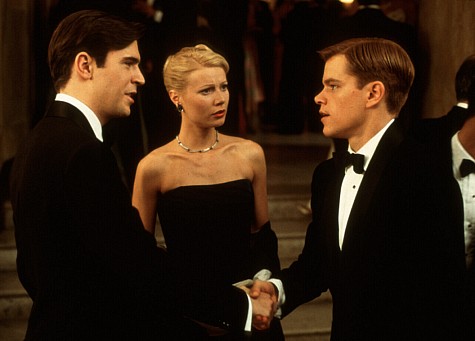
The night I arrived in Rome to start work on Ripley, I met Anthony in an almost comically perfect family restaurant in Trastevere. He was so happy and excited to be setting out on what was clearly a labour of love in the most complete sense. The film would show his adoration of Italy, the home of his ancestors; it would be a meditation on how social exclusion can corrupt a sense of self.

My not-so-hidden terror at working with a man whose previous film had garnered nine Academy Awards evaporated almost instantly in his embrace. Literally. Ant was one of the most effusively tactile people I have ever met. He used touch the way other people use words. It is a measure of the gentleness of the man that his continual pummelling and kneading never felt like an invasion, but simply an extension of his not inconsiderable powers of communication.

My nervousness at working with Ant stemmed from the fact that he was the first true artist I had ever been directed by. I remember how alarming it was receiving notes from him on set. Often, the open-endedness of the emotional world one is trying to create, means that discussing variations in performance can be a relatively free-form discussion, almost a gentle negotiation. With Ant however, his note giving was positively laser-like in it’s precision. Much of this was of course to do with the fact he had written the script. It was a case of knowing the topography of his story so well that he knew exactly what he was after, at all times. Which is not to say he was bullying or domineering, he just directed with a clear-eyed exactness that was rare indeed.

Somebody told me early on in our rehearsal period for the film that my character, Peter Smith-Kingsley (who in the novel appears in only one scene), had become in Ant’s writing an amalgam of qualities that he most admired in people. I found this information frankly terrifying, but Ant put it to me slightly differently. He said that Peter was the only character in the story who was comfortable in their own skin, and it was this quality that attracted Tom Ripley. A big part of that attraction was also bound up in Peter’s profession as a musician. Music saturates the film, and is used by many characters to say things they cannot express themselves. Ant’s insistence that I learn to conduct the Stabat Mater piece and play the piano, was the greatest excavation tool he gave me for the character. He would give me beautiful selections of music to help me get inside Peter’s head. I’m sure Ant would have endorsed the Walter Pater quote about all art aspiring to the condition of music. Indeed, that idea seems to be one of the major themes of the film.

I remember a story Anthony told me about a gift he had been given one the first day of shooting by his editor, the great Walter Murch. Walter had presented Anthony with a lacquered box filled with tiny hand-tied scrolls, one for each day of principal photography. Each one contained an aphorism that Walter had chosen and written out. Anthony said he would open one at random first thing, and then ponder it while he stood in the shower. He told me how strange it was that whatever the scroll said, there would be a moment during the day’s filming where it’s sentiment would prove to be weirdly pertinent. I always thought you must be able to inspire friendship and loyalty of a higher order to receive a gift like that. I still get a kick out of thinking how much fun Walter would have got making those scrolls, and how much pleasure Anthony received every morning as he rolled ‘Professor Murch’s Thought for the Day’, around his head.

The last time I saw Ant, we bumped into each other on a bridge in Austin, Texas. I was shooting a movie, and he was in town to support his son Max at a film festival. He was so proud, and so easy in the role of not-being-the-centre-of-attention. It was an honour to know Anthony Minghella- he was a man of huge achievement who wore his success as lightly as anyone could. I miss him terribly.

– Jack Davenport, September 2008

Reading University

10.5.12

To Reading University, where – with pride, sorrow, pride – we attended the opening of the new (Anthony) Minghella Building for Film, TV and Theatre.

David Puttnam did the opening honours. Anthony would have been delighted, embarrassed, delighted.