The New Normal

by Edana Minghella, in Liguria, Italy.

Chatting to G, my neighbour, in the garden, when we hear something. A loud something that makes us prick up our ears. There are two thick walls and a metre-wide path between us, so we’re legal. It’s sunny and warm. We are tantalisingly close to the sea – only a twenty minute walk downhill through the olive groves – but we are not allowed to wander down there. It’s 15th March 2020, in Liguria, and thanks to the spread of deadly coronavirus, Italy is on lockdown.

It’s a man’s voice that we are hearing, muffled through a rubbish microphone, declaring something, sternly, authoritatively. I can’t make out the words. My limited Italian doesn’t help. It’s reminding me, incongruously, of the old rag and bone man who used to come with his horse and cart through our town on the Isle of Wight when I was a kid. But this isn’t a request for your old bedstead or a rusted radiator. It’s the police, G tells me, and together we listen again, harder.

Italy’s complete lockdown started a few days ago and people are only just getting used to it. Here in our small Ligurian seaside town, we had not been directly affected by the virus. But things escalated very, very quickly, much more quickly than any of us could have predicted. The speed of change, as much as its drastic nature, has been shocking.

Just three weeks earlier, a cluster of 11 small towns and villages, with a dense concentration of cases and subsequent deaths, had been put under quarantine: the red zone (“zona rossa”). It was distressing and alarming, but it seemed a distance away – some 200 miles further north – and it was being contained. Except it wasn’t. The disease was spreading and the death rate was increasing. On the 7th March, the red zone was expanded to include heavily populated, wealthy areas like Milan, Venice, Parma and Rimini. Two days later, restrictions started to cover the whole of Italy. People would have to maintain a distance of one metre from each other; restaurants and bars could stay open for limited hours but only if they could guarantee this distance; all sporting events would be cancelled; travel would be restricted; schools were closed; our beloved street markets forbidden. Finally on the 11th March – only five days after the sudden increase in the red zone – additional controls were introduced and the lockdown complete. All non-essential businesses were shut: no bars and restaurants, no hairdressers, no clothes stores, no post office, no banks, no solicitors’ offices, no estate agents, no stationers, no garden centres, no d-i-y shops, no Ikea, no nothing. Everyone was ordered to stay within their own homes, unless it was essential to go out for food, medical or emergency reasons. Any time we go out we must take with us a signed form, stating where we are going and why. Even with a valid reason to be outside, we must stay within our town’s boundaries. We must not congregate in groups. We cannot visit friends or family. We can be challenged at any point, and if we are found to be violating the restrictions, we could be fined.

The policeman’s voice is nearer and we can hear him better now. The beautiful day has tempted people out, it seems. There have been walkers, taking the paths up to the hills, perhaps thinking the countryside would be a safer bet than the beach. But walking out is strictly forbidden, and the police are calling through loudhailers to remind us:

-Everyone must stay at home!

-You can only go out for emergencies or necessities!

-You must stay at home!

G and I look at each other and raise our eyebrows. This is the new normal, and we have no idea how long it will last.
Easy to love

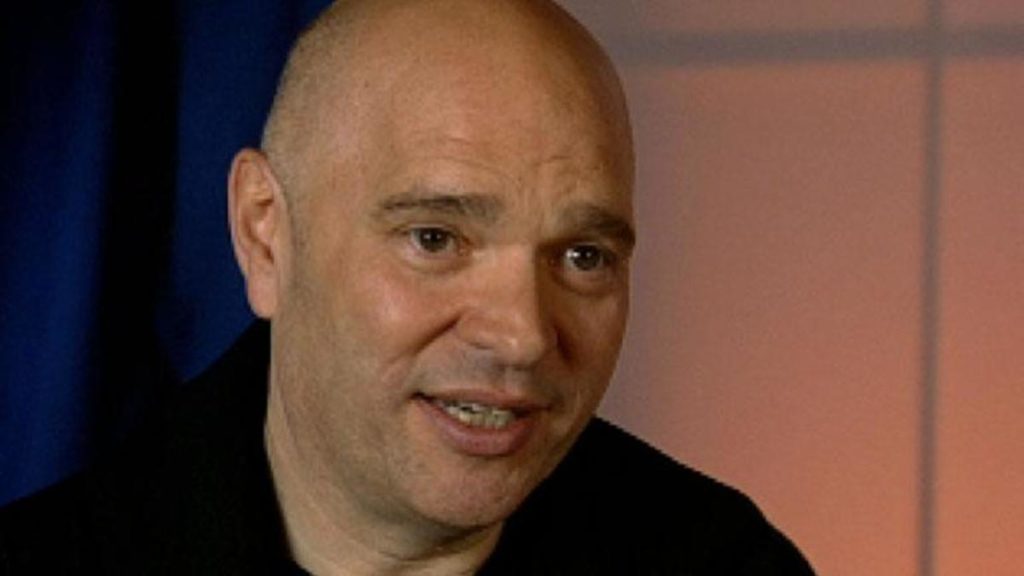
There is always a new picture of Anthony to be found on the internet, when I’m in the mood and feeling strong.

Here’s one I found today and I like it because it’s not posed. It’s him in mid-conversation. He has that expression behind the eyes of a man trying to connect, to truly communicate. He listened well, and gave pertinent, intriguing answers. He managed, always, to be modest but also to have something to say, and could add sparkling insight to something you thought you already fully understood. He was clever. He was gifted. He was not just easy to love, but impossible not to love.

Today is his birthday. He would have been 66. To those of us who found him impossible not to love, he IS 66; he wormed his way beautifully into our hearts, into our very souls, and his chocolate-voiced wisdom remains.

Beating a path up the High Street

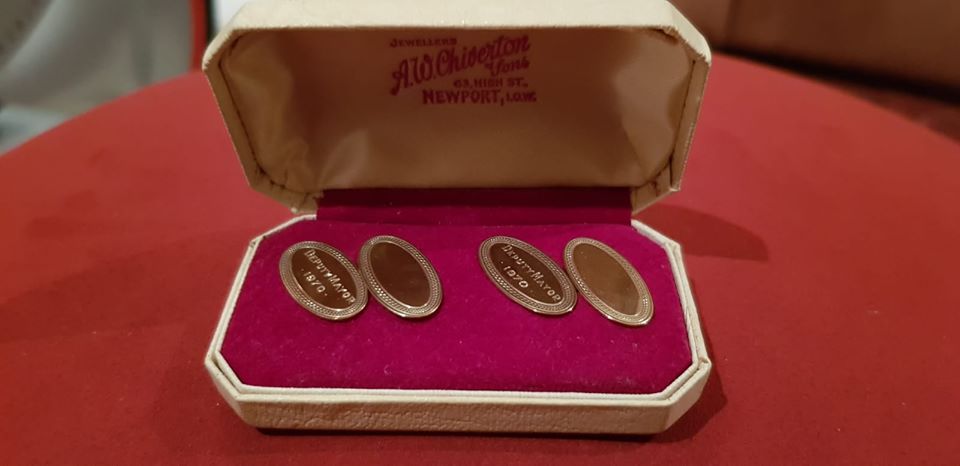
My Dad gave me these cuff-links last week.

They’re precious for obvious reasons, but also there’s a little story to them.

As you might be able to see, they commemorate his appointment to Deputy Mayor of the local council in 1970.

As half a century has passed, I hope it’s okay to share the story.

First, a bit of context. Dad was born in Glasgow to a UK-born mother and Italian-born father. They moved to Paris for work, but his father died when Dad was just six. His mother, in desperation, took the children to Italy and Dad had the rest of his youth there. But, such was their poverty, he had to work in the fields – shepherding buffalo! – to help support the family, and he was allowed only one year of schooling.

He returned to the UK just before the War, and served in the RAMC. That’s another, amazing story. Not least because, after so much time out of the country, he spoke no English.

After the War, he settled on the Isle of Wight with my Mum, Gloria. Together they set about running their businesses in the High Street in Ryde, a seven-day a week affair, and when they weren’t working, they were serving (as independents) on the council, on committees, as school governors, and on countless charities.

They were forever conscious of their Italian roots, and name. Mum, born in Leeds, had hardly even visited Italy, but no matter. To be foreign, and so conspicuously so, on the Isle of Wight, was quite a thing. Dad’s accent was, and remains, quite strong. So their energy was thrown into integration. More than that, they were pillars of their community. The term could have been invented for them. They gave and gave and gave.

Sometimes us kids were resentful. We wanted their attention. But it seemed always to be focused elsewhere – on some constituent’s planning application, or a troubled soul’s housing problem. The back kitchen of our cafe was an informal ‘surgery’, and everyone else’s problems appeared to matter more than ours.

Sometimes there was a bit of racism. We were called names. We were referred to as “the Ming-gellies” even though our name ended in an A, not an I. There was worse, but let’s let bygones be bygones. At the same time, we had become well-known and highly respected. By the time my Mum became the Mayor in 1980, and a JP and a DL and was awarded an MBE, etc, it seemed pretty normal. We were still Italian, but we were fully part of the community. (When Mum died in 2014, some of the tributes to her called her the “Queen Mum of the Isle of Wight”. If there is a heaven, she’d have been glowing with pride. She loved the royals. And she loved the Isle of Wight. She even wore a gold chain with a model of the Island for the last many years of her life.)

All of which is to try to communicate what must have been a concerted, determined, exhausting effort to integrate. To overcome their foreignness, to win hearts and minds through decades of service, commitment, and extraordinary warmth. To overcome, too, their lack of education. Dad with his single year, and Mum who, for similar reasons of poverty and absence of father, had left school at fourteen.

But I’ve gone past the story of the cuff-links. It’s only a small thing. In that time, 1970, civic office was bound up with the Masons. When my Dad was elected Deputy Mayor, it was quietly suggested to him that he might like to join the Masons. He politely declined. “But,” they said, “next year you’ll be the Mayor, and the Mayor is always a Mason.” My Dad politely declined. Then he realised what they were saying. If he didn’t become a Mason, he wouldn’t become Mayor. He had to choose.

He never became the Mayor.

I love my Dad, you may be able to tell. He wanted so badly to be a community leader. But he wanted his principles more.

Things changed. My Mum became Mayor with no need for compromise. More recently, Dad was made a Freeman of Ryde. A small honour, you might think, for someone who gave decades of service to the Island’s councils, business associations, charities and schools. It confers only the right to drove sheep up the High Street – which I guess would take Dad full-circle back to his shepherding days in rural Italy!

But somehow it means so much. It shows that there is a collective memory of, and gratitude for, his contribution, even though – at 98 and counting – most of his contemporaries have long since passed away.

Bravo, Dad. And thank you for the cuff-links. When I am tempted to take the easy path, the wrong path, I’ll open up this little box, and remember, and, I hope, think again.

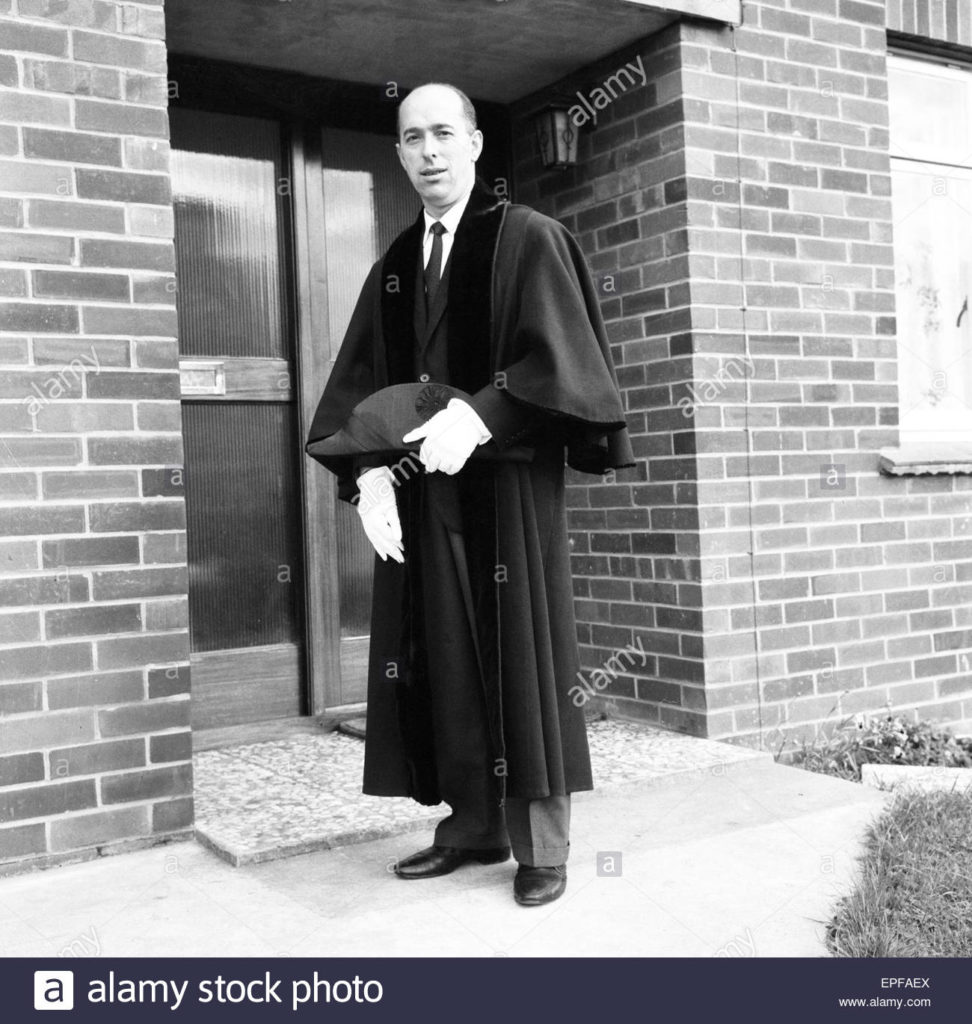
Found on the web, an Alamy image I had not seen until now – Edward in his Deputy Mayor’s garb, outside our house in Ryde.